
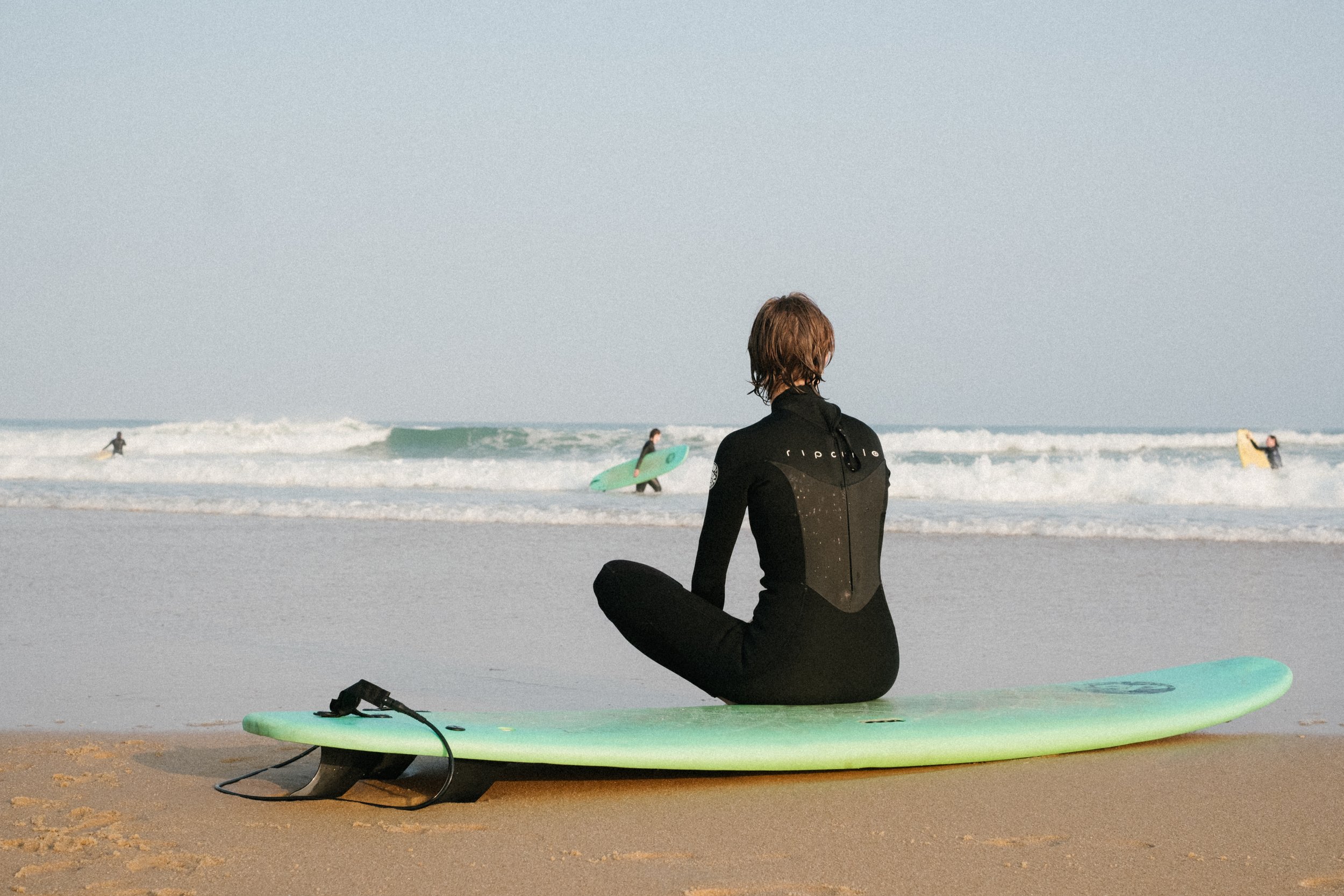
You've been surfing for a season or two. You can paddle out, you can catch waves, you can pop up most of the time. But somehow, you're stuck. The waves that look makeable keep closing out on you. Your turns feel awkward and forced. You watch other surfers flowing down the line while you're still fighting to stay on your feet.
Here's the frustrating part: everyone tells you the same thing. "Just surf more." "You need more time in the water." "It'll click eventually."
But what if it's not about time? What if you're missing something fundamental that nobody's bothered to explain?
The Missing Manual Problem
Surfing doesn't come with an instruction manual. Most of us learn through a chaotic combination of surf lessons, YouTube videos, advice from better surfers, and painful trial and error. The problem is that each source gives you a piece of the puzzle, but nobody gives you the whole picture.
Think about it like learning to drive. Imagine someone taught you how to turn the steering wheel, but never mentioned that you need to look where you want to go, not at the front of the car. You'd technically know how to steer, but you'd be terrible at it and have no idea why.
Surfing is full of these missing pieces. Small details that completely change everything once you know them. Let me give you some examples.
The Paddle-In Adjustment Nobody Tells You
When you're paddling for a wave, most beginners stare straight ahead at the shore. They paddle as hard as they can, pop up, and hope for the best.
Here's what changes everything: look over your shoulder at the wave behind you.
Once you can see the wave, you can read it in real time. Is it steepening up fast? Speed up your paddling. Is it starting to feather but you're already in position? Slow down or even pause so you don't get too far ahead of it. The wave will tell you exactly what it needs if you just turn around and look at it.
This single adjustment changes your catch rate dramatically. You stop getting pitched over the falls because you paddled too early. You stop missing waves because you didn't commit hard enough. You can actually respond to what the wave is doing instead of guessing.
Why doesn't anyone tell you this? Because experienced surfers do it automatically. They don't even remember learning it.
Your Bottom Turn Isn't Actually a Turn
Let's talk about the bottom turn, because this is where most intermediate surfers completely fall apart.
Everyone knows you're supposed to do a bottom turn. You've seen the photos. You know it's important. So you get to your feet, you reach the bottom of the wave, and you try to turn your board like you're steering a car.
Here's the thing nobody explains: a bottom turn is a lean, not a turn.
When you lean into a turn on a surfboard, the rails engage with the water. The board's rocker and rail shape do the actual turning for you. Your job isn't to force the board around, it's to shift your weight in a way that allows the board to follow its natural arc.
Let me break this down:
What you think you should do: Twist your upper body hard in the direction you want to go. Crank the board around using your shoulders and arms. Fight to redirect the board up the face.
What actually works: Look where you want to go (this naturally rotates your upper body). Drop your back hand down toward the wave face (this drops your weight onto your back foot and inside rail). Keep your chest open to the wave. Let the board carve.
The difference is night and day. When you try to muscle the board around, you're actually working against the design of the surfboard. When you lean and let the board do its job, everything becomes smooth and natural.
Watch good surfers and you'll see it. Their bottom turns look effortless because they're not fighting the board. They're working with it.
You're Looking at the Wrong Thing
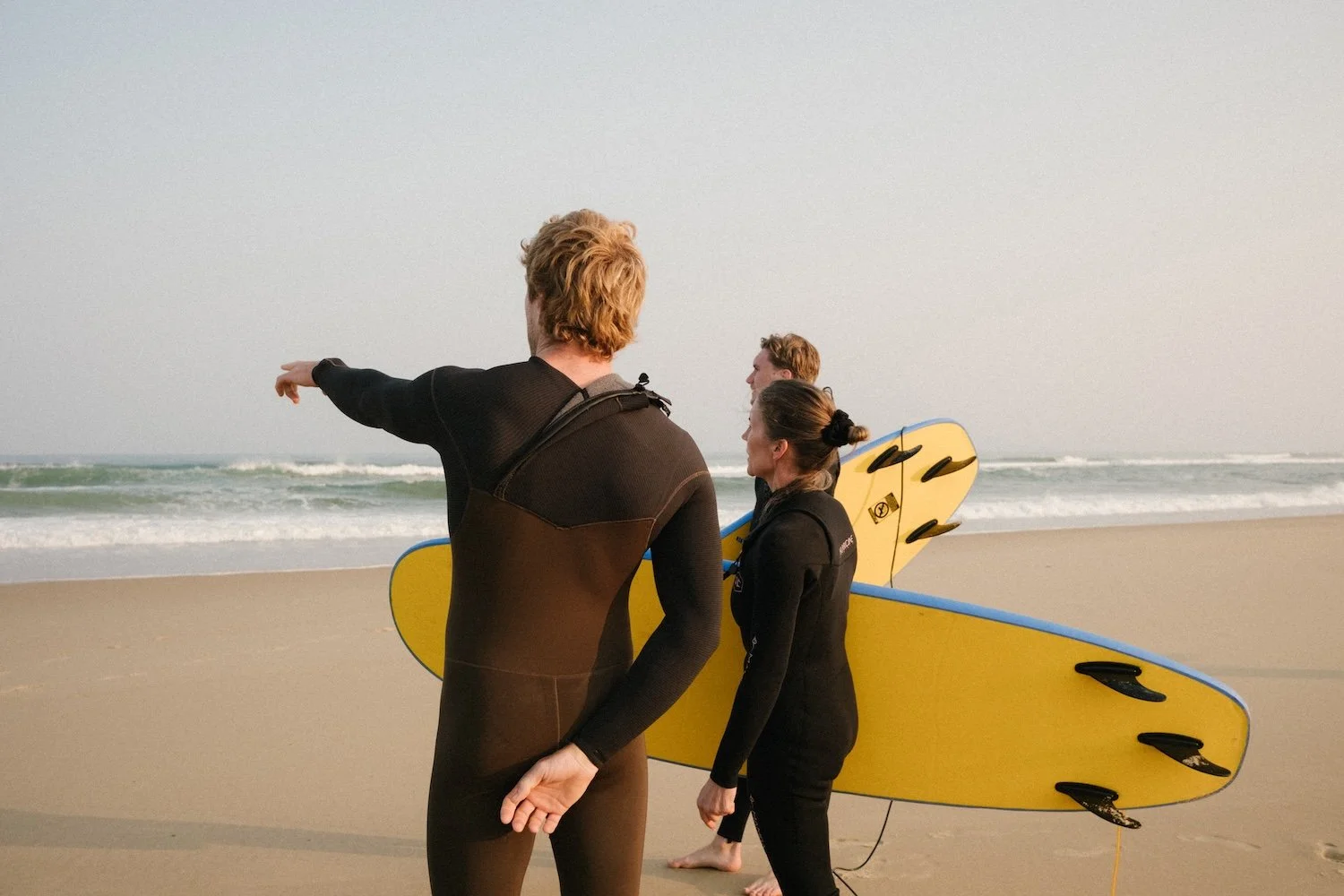
This connects to something even more fundamental: where you look determines where you go.
Beginners look down. At their feet, at the board, at the water right in front of them. This keeps your weight forward, locks up your body, and makes it nearly impossible to turn properly.
Intermediate surfers often look at the spot where they want to turn. Better, but still not quite right.
Advanced surfers look down the line, toward where they want to be two or three moves from now. Their head turns first, their shoulders follow, their hips rotate, and the board responds. It's all connected.
Try this: next time you're on a wave, consciously look toward the shoulder of the wave (the unbroken part) instead of at the whitewash or at your board. Your body position will change automatically. Your turns will feel more natural. You'll start to flow instead of fighting.
It sounds too simple to matter. But it's probably the single biggest thing holding you back.
The Equipment Trap
Here's an uncomfortable truth: you might be riding the wrong board.
Surf shops will happily sell you a short, narrow, low-volume board because that's what the pros ride. Surf schools will rent you a massive foam board because it's safe and stable. Neither is probably right for where you are now.
If you're past the absolute beginner stage but still struggling to generate speed and link turns, you probably need more volume than you think. Not beginner board volume, but enough flotation that you can paddle into waves earlier, pop up with stability, and have enough speed to practice your turns.
The wrong board doesn't just slow your progression. It can completely stall it. You'll spend all your energy just trying to stay on the thing instead of actually surfing.
A good guideline: if you're fighting to catch waves, if you're constantly bogging your rail when you try to turn, if you feel unstable when you pop up, you probably need more volume or a different board shape. There's no shame in riding a board that suits your current skill level. In fact, it's the fastest way to improve.
The Timing Issue Nobody Addresses
Most surfers spend years working on their pop-up technique. They practice on the beach, they watch videos, they drill it in their living room. And then they get in the water and still can't seem to get to their feet cleanly.
Why? Because the pop-up itself isn't usually the problem. The problem is when you're doing it.
If you pop up too early (while the board is still climbing the face of the wave), you'll usually either fall backward or lose all your speed. If you pop up too late (when the wave is already breaking under you), you'll get thrown forward or pearl.
The window is smaller than you think. You need to pop up at the exact moment when the board reaches maximum speed on the drop but before the nose starts to dive. This is usually right as you feel the wave pick you up and start to accelerate you down the face.
How do you develop this timing? By paying attention to the feeling, not just the mechanics. The moment when everything goes weightless for a split second, when you can feel the wave commit to you, that's your cue. It's different for every wave and every board, which is why it takes time to develop. But once you know what you're feeling for, your pop-up success rate will skyrocket.
The Practice Paradox
Here's where "just surf more" becomes actively bad advice: more time in the water only helps if you're practicing the right things.
If you're reinforcing bad habits, more sessions just make those habits stronger. This is why you see surfers who've been at it for years still making the same basic mistakes.
Quality beats quantity. One hour of focused practice where you're actively working on specific skills is worth more than five hours of mindlessly catching waves and hoping to improve through osmosis.
What does focused practice look like?
Pick one thing to work on per session. Maybe it's looking where you want to go. Maybe it's timing your pop-up. Maybe it's engaging your rail on your bottom turn. Have that thing in your mind before you paddle out. After every wave, do a quick mental replay. Did you do the thing? What happened when you did it? What do you need to adjust?
This doesn't mean surfing becomes serious and un-fun. It just means you're surfing with intention instead of hope.
The Feedback Gap
One of the hardest parts about learning to surf is that you often have no idea what you're actually doing wrong.
You know the wave didn't go well. But was it your timing? Your weight distribution? Where you were looking? How you angled your takeoff? The speed of your pop-up? Your body position? Some combination of all of the above?
This is where video becomes invaluable. Having someone film you for even five minutes gives you information you simply cannot get otherwise. You think you're looking down the line. Video shows you're looking at your feet. You think your stance is good. Video shows your back foot is too far forward. You think you're leaning into your turns. Video shows you're standing up straight and trying to twist.
The gap between what you think you're doing and what you're actually doing can be enormous. Video closes that gap instantly.
Even better is having someone who knows what they're looking for watch you and give you feedback in real time. Not generic advice, but specific observations about your individual technique. This accelerates learning exponentially because you're no longer guessing at what needs to change.
The Fear Factor Nobody Talks About
Let's address something uncomfortable: sometimes you're not progressing because you're scared.
Not scared of drowning or scared of sharks. Scared of falling. Scared of getting worked. Scared of taking off on a wave that's bigger or steeper than what feels comfortable.
This fear is rational. Getting slammed by a wave hurts. But it's also the ceiling on your progression. You will never get better at surfing steep waves if you only take off on mellow ones. You will never develop confidence in bigger surf if you stay in small surf.
The solution isn't to just huck yourself into situations you're not ready for. That's how people get hurt and develop lasting fear issues. The solution is gradual exposure. Push your limits by 10%, not by 100%. Take off on one wave per session that feels slightly beyond your comfort zone. Get comfortable with falling and getting worked in controlled situations.
Your body needs to learn that wiping out isn't actually that bad. Once it knows that, your surfing will open up dramatically. You'll commit harder. You'll take off deeper. You'll try maneuvers you've been avoiding. And suddenly, you'll start improving again.
The Pattern Recognition Problem
Experienced surfers can look at a set coming and know within seconds which wave will be the best one, where to position themselves, and how the wave will break. Beginners see water moving and hope for the best.
This isn't magic. It's pattern recognition developed over hundreds of hours in the water. But here's the thing: you can accelerate this learning by paying attention deliberately.
Before you paddle for a wave, make a prediction. "I think this wave will break left and section in the middle." Then see what actually happens. Were you right? If not, why not?
Watch waves you don't catch. Watch other surfers. Watch the sets roll through. Your brain is incredible at finding patterns if you give it the data to work with.
Over time, you'll develop what feels like an instinct for waves. You'll know where to sit. You'll know which waves to let go under you. You'll know when to paddle inside and when to stay wide. This doesn't just improve your wave count, it dramatically improves wave quality. You'll stop wasting energy on closeouts and start positioning yourself for the makeable ones.
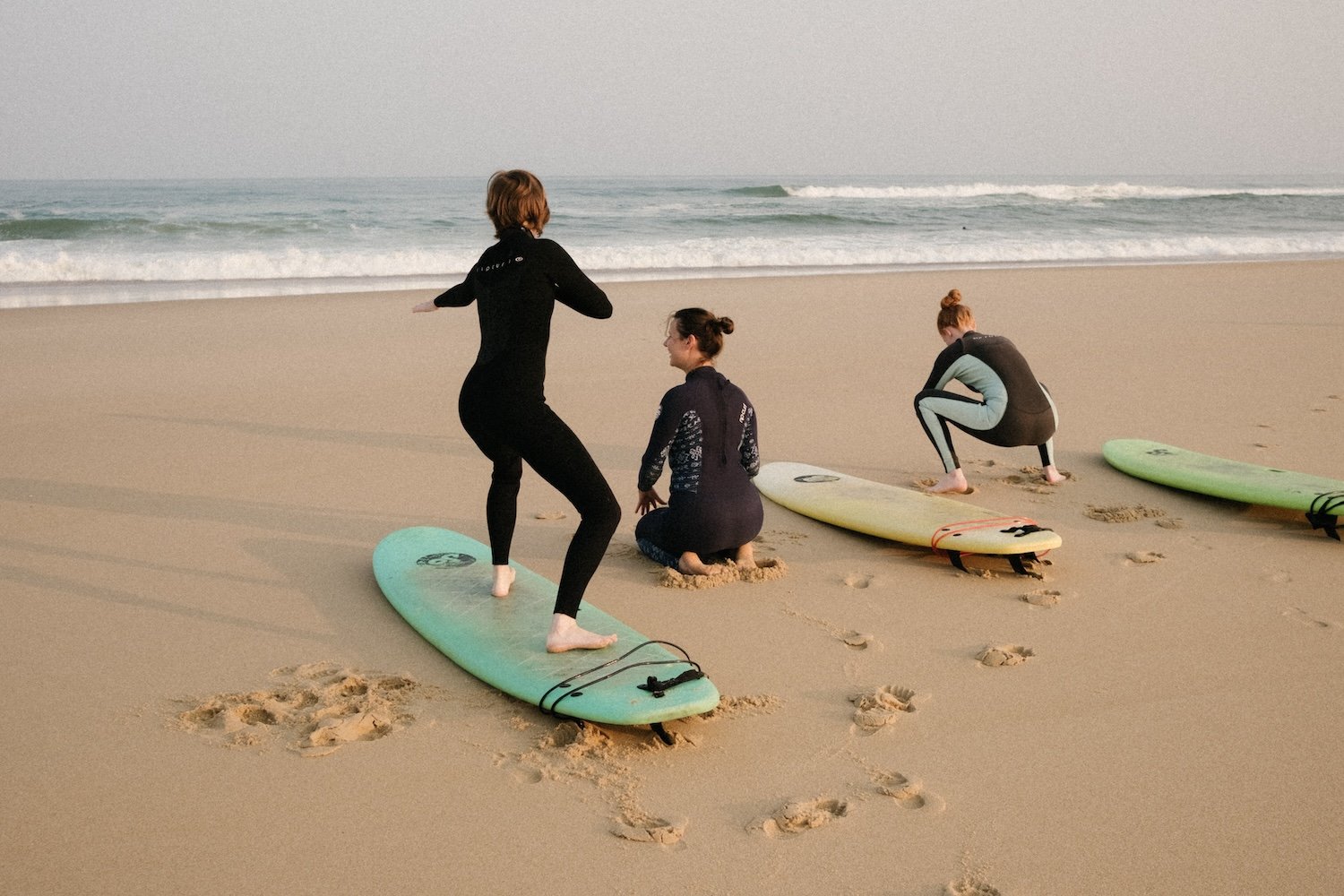
The Real Work Happens on Land
Finally, here's something most surfers don't want to hear: if you want to get significantly better at surfing, you need to do work on land.
Surfing demands a very specific kind of fitness. You need paddle endurance. You need explosive pop-up power. You need rotational flexibility. You need balance and proprioception. You need leg strength and core stability.
You can develop some of this through surfing alone, but it's wildly inefficient. An hour of targeted land training per week will improve your surfing more than an extra session in mediocre waves.
This doesn't mean you need to become a gym rat. Simple things make a huge difference. Practice your pop-up at home until it's muscle memory. Do yoga or mobility work to improve your rotation and flexibility. Do some paddle-specific exercises. Work on your balance with a balance board or Indo board.
The surfers who improve fastest aren't necessarily the ones who surf the most. They're the ones who approach surfing as a skill to be developed, not just an activity to be enjoyed.
Putting It Together
If you've been stuck at the same level for months or years, it's probably not because you lack talent or because you need to just surf more. It's because you're missing key pieces of information that would unlock the next level.
Here's your action plan:
Start looking over your shoulder when you paddle for waves. This one change alone will improve your catch rate and give you better information about the wave.
Reframe your bottom turn as a lean, not a twist. Look where you want to go, drop your weight onto your inside rail, and let the board carve.
Keep your eyes looking down the line, not at your feet. Your body follows your eyes.
Get on video at least once. The gap between what you think you're doing and what you're actually doing is probably larger than you imagine.
Pick one thing to work on per session. Focused practice beats mindless repetition.
Make sure you're on the right equipment. The board that works for your favorite pro might be actively holding you back.
Push your comfort zone gradually. Get comfortable with wiping out so fear stops limiting your progression.
Surfing is hard. It's supposed to be hard. But it shouldn't be mysterious. With the right information and deliberate practice, you can break through that frustrating plateau and start progressing again.
The stoke is in the improvement. So get out there and put these pieces together.